




Supporter
Osaka’s Kita Area—Rei Jonishi Introduces Umeda Sky Building and More with the Osaka e-Pass! (PR)
Konnichiwa! I’m Rei Jonishi and I’m the model you see in the photos here. I want to see how many places I could visit in the Kita area of Osaka with the Osaka e-Pass.
I made my plans with these three things in mind:
① Walking as a mode of transportation, to spend as little time in transit as possible.
②Balancing indoor and outdoor destinations to prevent disruptions caused by weather.
③Using QR codes for tickets to make the process as smooth as possible.
And of course, having a fun day!

Here is what I have planned: 【start the afternoon in Umeda → Umeda Sky Building → Art Museum and Cafe → end at an experiential restaurant in the evening
Contents
Umeda Sky Building Observation Deck, from the Glass Elevator to the Photogenic Escalator to the Open-air Corridor

First stop: Umeda Sky Building’s Floating Garden Observatory.
Since the new Grand Green Osaka opened, it feels like Umeda Sky Building is so much closer to JR Osaka Station and the other stations in Umeda.
Once you arrive at Sky Building, hop on the high-speed elevator and zoom straight up to the 35th floor!

Because the elevator has glass windows, you can see a beautiful view stretching out between the buildings. And from the very moment you step on the elevator, you’ll feel like you’re being transported into a whole new world.
When you step off, a new journey awaits—the famed “see-through escalator” that is equally as otherworldly.

You’ll walk along the straight sky corridor connecting the 35th and 39th floors. The higher you go, the farther the cityscape stretches below. It was so exciting. What a great anticipation builder!
When you finally reach the top, use the Osaka Enjoy Pass to enter the Floating Garden Observatory.
All you have to do is show the QR code on your smartphone and you’re in!

The Floating Garden Observatory is made up of an indoor floor (40th floor) and the rooftop walkway, the Sky Walk.
The rooftop sits 173 meters above the ground, offering a full 360-degree panoramic view.


Because the Sky Walk is outdoors, you can really feel the sound of the wind and take in the refreshing air. Gaze out over the gentle flow of the Yodo River and you’ll spot the silhouette of Awaji Island in the distance!
The sparkling cityscape of Osaka, the sky’s changing gradients throughout the day, the seasonal shapes of the clouds… Even though the location is always the same, there’s always something new to enjoy in the scenery from the observation deck.
After circling the rooftop, head back indoors to the 40th floor for a breather.
You can relax at cafe SKY 40, giving your feet a rest while enjoying the view one more time.
This time, I chose the Color Pop Soda Float in blue.

The refreshing vibe, matching the color of the sky, gives you a boost of energy for your next destination.
There are counters and tables on both the river-view and city-view sides, so no matter where you sit, you can enjoy Osaka’s cityscape. Here, the stunning scenery truly takes center stage.
A typical visit—including getting there, sightseeing, and a café break—takes about 90 minutes.
One thing to keep in mind: with the Osaka e-Pass, admission is available only from 9:00 a.m. to 3:00 p.m., so plan accordingly!
If the weather looks iffy, you can enjoy the indoor floor first and head up to the rooftop once the wind calms down—a flexible approach that’s one of the Umeda Sky Building Floating Garden Observatory’s strengths.
Hours: 9:30 a.m. – 10:30 p.m. (Free entry with Osaka Enjoy Pass until 3:00 p.m.)
Closed: Open year-round
Admission: ¥2,000
Access: About a 7-minute walk from JR Osaka Station, about a 9-minute walk from Hankyu Osaka-Umeda Station, about a 9-minute walk from Osaka Metro Umeda Station
Official website:https://www.skybldg.co.jp
*The full course introduced in this article would normally cost about ¥6,800.
With the Osaka e-Pass ¥2,400 + Magic Soleil special price ¥1,000, you can enjoy it for about ¥3,400 — almost half the cost!
Purchase your Osaka e-Pass→
Kinutani Koji Tenku Art Museum in Umeda Sky Building—An Immersive Experience in Blue and Red, Plus a Cafe
Next, I headed to Sky Building Tower West, which is in the same building, to visit the Kinutani Koji Tenku Museum.
I took the high-speed elevator to reach the 27th floor, where an iconic sun greeted me at the reception.

When you enter, you grab a pair of 3D glasses and follow the friendly staff to the Symbol Zone. Here, your journey into Kinutani’s world kicks off with the breathtaking “Celebration: Hiryuu Fujihoumon.” It’s the perfect start to an unforgettable adventure with art!

The 3D images projected onto the round screen—about 3 meters tall and 14 meters wide—truly make you feel like you’re stepping right into the artwork. It’s incredible!

Petals dance to the music, a dragon seems to surge toward you, and the energy of the wind and thunder gods fills the space… it’s so powerful, you can’t help but feel it in your body.
The exhibition rooms are divided into two striking zones: “Blue,” evoking the skies of Italy where Kinutani studied, and “Red,” expressing a distinctly Japanese aesthetic with vermilion walls and lattice patterns. Every six months, the museum changes its theme for a fresh, special exhibition.

Kinutani’s colorful works, created using techniques from frescoes—the classic murals—always reveal something new each time I see them. His artwork naturally gives me such a “positive” feeling!
This time, I also tried the museum’s VR experience. Once I put on the headset, Koji Kinutani himself spoke directly about the magic of the Sky Museum, gently reminding me how important it is to see the artworks with your own eyes, right in front of them.

You can almost feel the colors coming to life and the dynamic brushstrokes in three dimensions—it’s more than just an explanation; it’s a true recreation of the encounter with the art. Even the thickness of the paint and the subtle “breath” of the pigments, which you can’t catch through a screen, become tangible, and there’s a moment when your eyes and heart suddenly focus in perfect harmony.
Another highlight was the “Atelier Introduction.” The exhibit recreates the tools, layout, and lighting that Kinutani actually used, letting you sense the artist’s presence. From the canvases and palettes to the arrangement of colors and the traces of test strokes on the walls, the very rhythm of creation comes alive in front of you.

Here, you get a sense of the time and discipline behind the artwork, which makes the viewing experience feel even deeper. It’s a space where you can truly feel that Koji Kinutani’s spirit has been poured into the atelier.
Through the VR experience, you understand the meaning of “seeing,” and in the atelier, you touch the place where the art is born. After experiencing both, returning to the exhibition rooms makes the same paintings look completely different—the colors feel denser, and the energy flows in new ways. Definitely give it a try!
After your visit, you can cool down at the Sky Café on the same floor. If you use the Osaka Enjoy Pass, it looks like you get a 20% discount at the café—another great perk of the pass.
The café’s interior is inspired by the museum’s signature colors—red, blue, and yellow. The chairs and cushions are carefully chosen Italian designs, while the tables feature a touch of traditional Japanese style.

There are counter seats for enjoying the afterglow alone, and table seats perfect for lively conversation. Both are comfortable, letting you quietly savor the experience you’ve just had.
I treated myself to an Italian soda—Kin Fugaku Asahi with Wind and Thunder Gods (Yuzu flavor).

The menu names are playfully inspired by the title of the work, and the gentle scent of yuzu refreshes both mind and spirit.
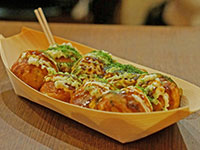
The food is a “cream puff disguised as takoyaki.” It looks just like takoyaki, but once you take a bite, the creamy filling and chocolatey sweetness melt in your mouth. It’s the kind of delightful surprise that makes you smile instantly.

For me, the museum and taking a café break took about 70–90 minutes.
And combining it with your visit to Umeda Sky Building, is a good move because it’s all within walking distance. You can visit both sites with minimal time lost in transport. I highly recommend pairing the Kuchu Teien Garden with the Koji Kinutani Sky Museum in the same day!
Using the Osaka e-Pass makes things even easier, since you don’t have to pull out your wallet at each entrance.
Hours: 10:00 AM–6:00 PM; Fridays, Saturdays, and the day before holidays until 8:00 PM (last admission 30 minutes before closing)
Closed: Tuesdays (or the following weekday if Tuesday is a holiday), December 30–January 3, and during exhibition changeovers
Admission: ¥1,300
Access: About a 7-minute walk from JR Osaka Station, 9 minutes from Hankyu Osaka-Umeda Station, or 9 minutes from Osaka Metro Umeda Station
Official Website:https://www.kinutani-tenku.jp/
*The full course introduced in this article would normally cost about ¥6,800.
With the Osaka e-Pass ¥2,400 + Magic Soleil special price ¥1,000, you can enjoy it for about ¥3,400 — almost half the cost!
Purchase your Osaka e-Pass→
Step into a Magical World at Magic Soleil
I finished my day with dinner at “Magic Soleil” a magic-themed restaurant.
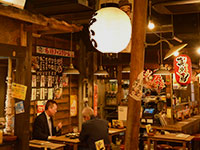
Inside, each area has its own theme, creating a whimsical, fantasy-like atmosphere filled with vibrant colors and dazzling lights!

The atmosphere is lively and fun, perfect for both families and friends.
And the menu features dishes that really enhance that resort-like vibe. I started with the visually striking “Onion Ring Tower” and a “BIG Beer”—both made a big impression right away!

Many of the menu items are conversation starters, so the table quickly becomes lively and fun.
Once your stomach and heart are full, it’s finally time for the interactive magic show—about an hour of pure excitement (I’d been waiting for this!).

Top performers from all over Japan take the stage on a rotating schedule, delivering one surprise and laugh after another. I tried to figure out the tricks, but couldn’t tell how any of them were done!
During the show, there were also interactive magic moments where the audience can join in—and I got to participate.
I tried a “lifting the table” trick, and the moment it actually started to move, I gasped in excitement.


I couldn’t believe I did it! Pretty amazing, right?
With tricks like quick swaps and slight-of-hand card moves one after another, the show moved at such a lively pace that I almost forgot the time.

Whether you can take photos during the show or not depends on the act and where you are seated. Be sure to follow the instructions from the restaurant.
When it’s allowed, snap a memorable shot to remember the experience!

The experience of having dinner and a show all in one is the perfect way to wrap up the day.
I was still buzzing with excitement all the way home.
Showtimes: Weekdays at 6:00 PM and 9:00 PM; Saturdays, Sundays, and holidays at 12:00 PM, 3:00 PM, 6:00 PM, and 9:00 PM (doors open one hour before each show)
Closed: Irregular holidays
Admission: ¥3,500
Access: About a 9-minute walk from Namba Station (Osaka Metro Midosuji, Yotsubashi, and Sennichimae Lines, and Nankai), 8 minutes from Ebisucho Station (Osaka Metro Sakaisuji Line), 9 minutes from Nipponbashi Station (Osaka Metro Sakaisuji and Sennichimae Lines), or 9 minutes from Kintetsu-Nippombashi Station (Kintetsu Line)
Official Website:https://magicsoleil.com/
With the Osaka e-Pass, the ¥3,500 admission fee drops to just ¥1,000!
Please note: each guest is required to order at least one drink and one food item.
*The full course introduced in this article would normally cost about ¥6,800.
With the Osaka e-Pass ¥2,400 + Magic Soleil special price ¥1,000, you can enjoy it for about ¥3,400 — almost half the cost!
Purchase your Osaka e-Pass→
I spent a moment reflecting on my day.
My visit to Umeda Sky Building in the afternoon felt like walking in the sky. And I got a huge sense of fulfillment from energy and color at the museum. Plus Magic Soleil was full of uplifting joy, surprise, and laughter.
Thanks to the Osaka e-Pass, it was was quick and easy to get into each attraction. I didn’t have to waste time lining up to buy tickets—so I was able to fully focus on the experiences themselves.
For reference, this is how much time I spent at each destination [Umeda Sky Building Kuchu Teien: 90 minutes / Museum + Tenku Café: 70–90 minutes / Magic Soleil: around 120 minutes (dinner + show)].
In a total of about 4–5 hours, I had a great, well-rounded half-day plan for my time in Umeda.
The walking distance is manageable, and there are plenty of places to take a break along the way. So the plan is fun and stress-free.
On rainy days, you might want to switch up the order like this [Museum → Floating Garden (indoors → rooftop) → Magic Soleil].
Osaka Kita is the kind of area where you can pack your schedule without it ever feeling rushed.
Using the Osaka Enjoy Pass makes both transportation and admission smooth, and it really boosts the “density” of memorable moments.
On your next day off, I hope you’ll try this full-experience plan and feel the same excitement I did!
Osaka e-Pass
The Osaka e-Pass is a convenient e-ticket that gives you free access to more than 25 popular attractions.
You can choose between a 1-day pass (¥2,400) or a 2-day pass (¥3,000), making it easy to combine with your travel schedule.
It’s perfect for anyone who wants to enjoy sightseeing smoothly and efficiently.
●Profile

Jonishi Rei
Formerly a member of NMB48, she is now working as a model based in Osaka.
Her future dream is to work as a full-time model. She is currently focusing mainly on gravure (swimsuit/lingerie/themed) modeling.
X (formerly Twitter): @jonishi_rei
Instagram: @jonishi_rei
TikTok:@jonishi_rei
▼More Spots You Can Enjoy with This Pass
 Osaka Bay Area—Rei Jonishi Introduces Fun Cruises, Stunning Night Scenery, and More with the Osaka e-Pass (PR)
Supporter
The contents of this page were current at the time it was posted, but may differ from the present.
Text visible in this map is based on information from Map Tiler and may differ from actual geographical names.

Featured Supporters



Featured Articles